
Can you tell us about your career journey?
My career hasn’t been linear. I came to Harefield 28 years ago to cover a one‑year maternity post. At the time, pharmacy wasn’t as embedded in multidisciplinary teams as it is now; my role focused on ward cover, dispensary work and supporting transplant patients.
I fell in love with the specialty very quickly. Transplant pharmacy demands real thought - you use every bit of your medicines knowledge, and you work closely with the clinical team. When my one‑year post ended, Harefield created what became its first specialist cardiothoracic transplant pharmacy role - one of the first in the country.
Over time, my role evolved alongside the service. As it grew, so did opportunities to support patients across their entire journey - from intensive care to the wards and, later, medicines optimisation clinics.
Seeing patients five, ten or even fifteen years post‑transplant completely changed my perspective. You start to see the full picture: the skiing holidays, the family events, the normal everyday lives they get back. It reminds you why you do what you do.
I also helped establish the Solid Organ Transplant Pharmacists Association (SOPPA), which now has members across the UK and Europe, and became increasingly involved in international societies such as the International Society for Heart and Lung Transplantation (ISHLT). I’ve held several leadership roles there, including chairing the Advanced Heart Failure and Transplant Interdisciplinary Network and joining as a Director on the ISHLT board - a real pinch‑me moment.
Alongside my clinical work, I completed a PhD looking at dosing in ECMO patients. It was a long journey through COVID disruptions and self‑funding, but being at the graduation ceremony with my son - in the same year he graduated university - was incredibly special.
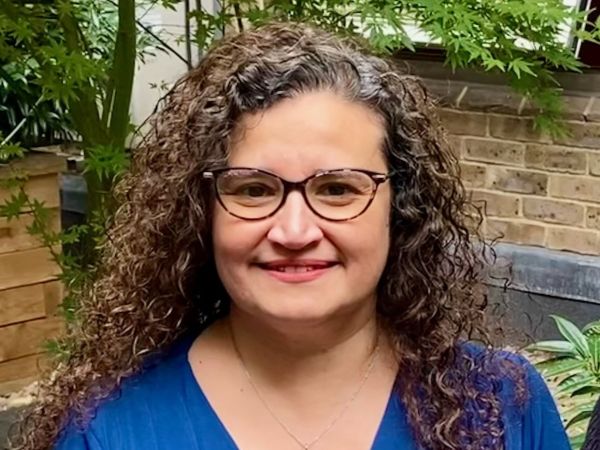
Today, I am the only consultant cardiothoracic transplant pharmacist in the UK. I combine that role while developing research collaborations locally, nationally and internationally.
It’s been 28 years, and I still love it.
What drew you to pharmacy and a specialism in transplantation?
I loved science and come from a medical family - but I have been known to faint at the sight of blood! So, when I was young, my dad took me into his work at a hospital and I spent time shadowing clinicians. Watching a clinical pharmacist from the US on the wards opened my eyes: here was someone using deep medical knowledge, working directly with patients and the team, but without the aspects of clinical practice that didn’t suit me.
Transplantation wasn’t something I planned. At the time, for me “specialist pharmacist” usually meant renal or haematology/oncology. I thought that was where I’d end up. But I fell into transplant, and once I did, I never looked back. The pace, complexity and patient relationships are unlike anything else.
What do you do day-to-day?
There’s no such thing as a typical day - or a typical week - but as a team, our work spans the entire transplant pathway. In critical care we review and prescribe immunosuppressants for all inpatients, support the unit in ward rounds, take part in complex MDTs. Medicines optimisation clinics give us the chance to support patients long after transplant, answer their questions, troubleshoot side effects, and understand how their medicines fit into their lives.
On the research side, I focus on personalised dosing – moving away from one‑size‑fits‑all approaches and understanding how devices like ECMO affect medicines. I’m developing collaborations across the Trust, King’s Health Partners and internationally, aiming for Harefield to become a centre that helps answer these complex dosing questions.
What is the most memorable thing that a patient has said to you?
There are so many moments across 28 years. Our patients are wonderful, and we build long‑term relationships with them. I remember a patient who sent me postcards from their first holiday after being in hospital for over a year. When I was pregnant, one patient confidently predicted I was having a boy based purely on the shape of my bump – and she was right.
But mostly, it’s the small things: the thank‑yous, the chocolates, the stories about their lives after transplant. Seeing someone meet their grandchild for the first time – that’s the real reward.
What recent advancements have you seen in your field?
There have been huge changes, but a few stand out. Using hepatitis C–positive donors has been one of the biggest shifts. 10 or 15 years ago, using hep C‑positive donors was too risky. Now we have highly effective antiviral treatments that can eradicate the infection. It means more organs can be used for patients on the waiting list. I worked with consultant colleagues at the Trust and at King’s to develop guidance together to help bring this forward. And a patient became the first at the Trust to receive a hep-C positive donor heart last year.
We are transplanting sicker, more complex patients. We now routinely support patients with VADs, ECMO and multiple antibodies. We’re learning from colleagues across the globe and adapting our strategies so more patients can access suitable donors.
The field never stands still - just when you think you’ve mastered something, something new arrives. That’s what keeps it exciting.
What advice would you give to someone considering a career in the NHS?
There are so many paths in healthcare beyond what you can imagine at 18. Stay curious, be open to them. Have a plan A, B, C… and be willing to follow opportunities you didn’t even know existed. I certainly never imagined becoming a consultant transplant pharmacist, doing a PhD or taking on leadership roles in international societies – but each opportunity opened a door.