
Can you tell us about your career journey?
I wanted to have a career where I was doing something to make a difference. I’ve always been very social and I enjoy helping and meeting new people, which is what attracted me to nursing.
I completed my adult nursing degree at the University of Surrey. I knew I wanted to pursue a career in cardiology after my last placement on an acute coronary care unit. I found it really interesting and it was a system in the body I understood well.
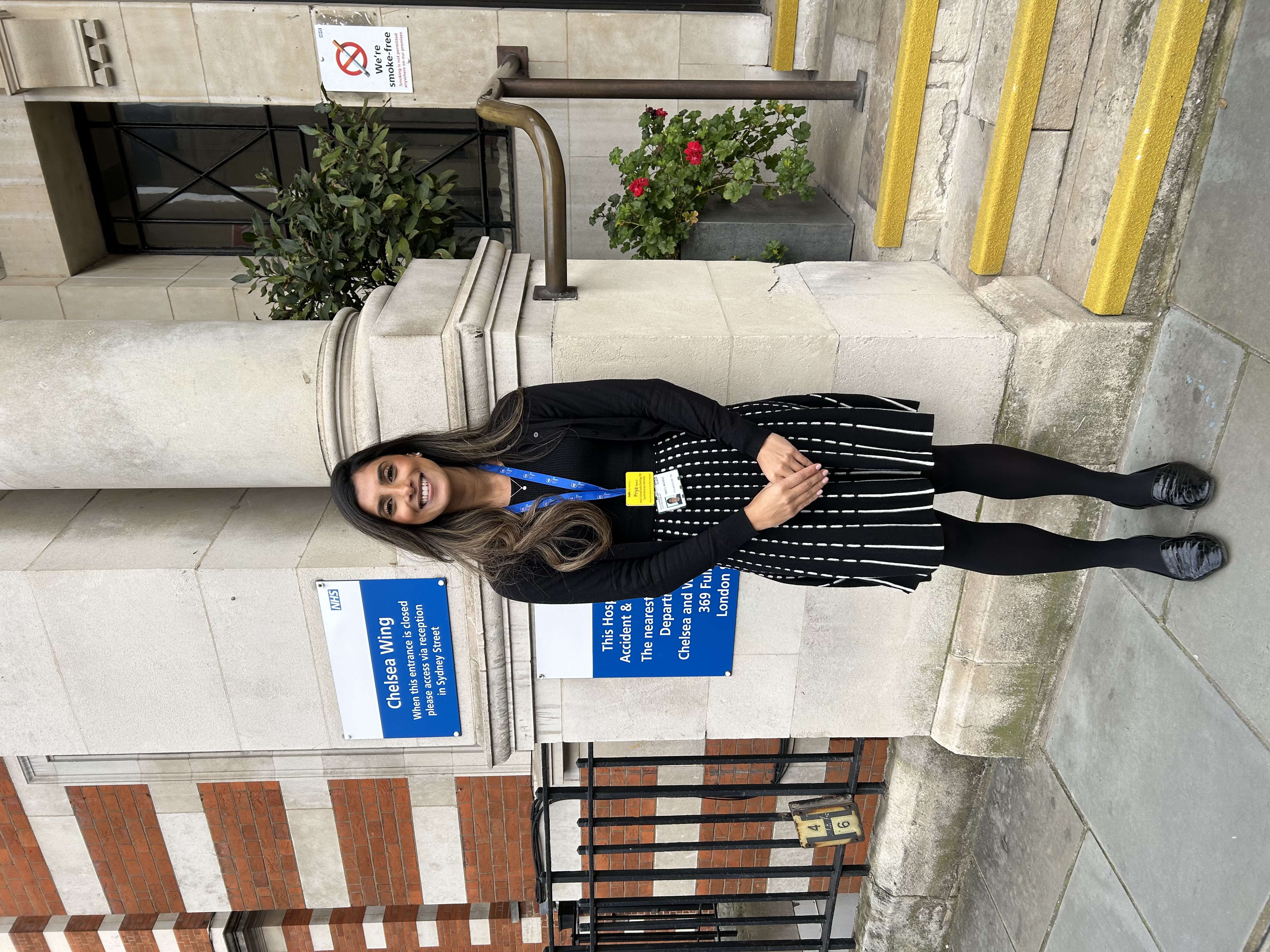
I started working at Royal Brompton nearly nine years ago as a newly qualified nurse on the wards. I left briefly for a year to work in cardiac rehabilitation at Imperial College London and returned to take on my current role as a clinical nurse specialist for cardio-oncology. The cardio-oncology service aims to improve the cardiovascular health of people before, during and after cancer treatment.
I’ve worked in this role for nearly four years now and alongside this, I hope to also complete my PhD on cancer survivorship and optimising heart treatments for cancer patients this year.
Why did you want to become a clinical nurse specialist in cardio-oncology and heart failure?
When I was a nurse on the wards at Royal Brompton, I always wanted to be part of the hospital’s heart failure service. I was a heart failure champion on the wards, which involved educating colleagues about heart failure and being one of the ‘key nurses’ to go to if a patient was admitted for management of heart failure. I always said to the team that if a role became available in the team, I would go for it. I’m really happy to now be part of the service.
Cancer treatments can help patients live longer. However, these treatments can also have side effects, including heart damage, known as cardiotoxicity. What drew me the most to cardio-oncology is the fact that somebody can already be very unwell with cancer and could also be at risk of developing a cardiac complication. If a patient’s heart doesn’t work properly, then this can interrupt their anticancer treatment. This was where I wanted to make a difference.
What I also enjoy in this field is in this specialism, I work with patients with different heart conditions such as arrhythmia, hypertension, and so on. So, I am able to experience all of the subspecialities of cardiology.
What do you do day-to-day?
Our cardio-oncology service at Royal Brompton was the first dedicated service to be set up in the UK in 2011. We usually get referrals to our service from all over the country. I may see a patient before their cancer treatment to complete a baseline cardiovascular risk assessment and initiate medications to help their heart function and/or manage pre-existing cardiovascular conditions, before they start their treatment. I also see patients during their treatment to monitor them and their heart function. If their heart function drops, their cancer treatment is usually interrupted. I therefore work with these patients to optimise their heart through medical therapy, so that they can resume their cancer treatment. Patients can also develop heart complications many years later after their treatment and so they are referred to our service.
What is the most memorable thing that a patient has said to you?
I love it when patients tell me that I’ve made a difference in their lives. When their heart function improves and they can continue to have their cancer treatment, they're always so grateful.
What recent advancements have you seen in the field of cardio-oncology?
There are lots of exciting developments within the field. For example, the European Society of Cardiology (ESC) now have a certification for doctors that signify they are able to practice within the field of cardio-oncology. This is something that I also want to do for nurses on a more local and national level, so I’m working with the ESC on this at the moment.
We hold congresses where cardio-oncology experts from around the world gather in one place. And we recently launched a new international cardio-oncology nursing programme.
Fellows from all over the world come and spend time with us to gain experience to help develop their own cardio-oncology service in their home country. As a result of our work and extensive collaborations in the cardio-oncology space, we were recognised as a Centre of Excellence in 2022 by the International Cardio-Oncology Society.
What advice would you give to someone considering a career in the NHS?
I would tell them to do something that they're passionate about. If you find what you really love, then it wouldn’t even feel like a job. I love coming into work. I love seeing all the patients and we've got such a great team. I’ve been really lucky to be at Royal Brompton for so many years. I’ve got great relationships with everyone and I’m really grateful for it.