


Women with heart disease can have an increased risk of heart problems and complications during pregnancy. If you have a heart problem, it is important that you discuss fertility, pregnancy and contraception with your cardiologist, obstetrician or specialist nurse before planning a pregnancy. As well as being able to tell you how your condition can affect the contraceptive you take, they can advise you what methods are most suited to you. Talking things through could also help you avoid having to deal with an unexpected pregnancy.
The suitability of different contraceptive methods may depend on other illnesses that you have, the medicines that you are taking, and your own personal preference.
We provide pre-pregnancy counselling to ensure that you:
- have an up to date assessment before conception to discuss of a possible need for pre‐pregnancy intervention to reduce the risk of pregnancy; an intervention may also be considered - prior to becoming pregnant - to optimize your long-term prospects
- discuss the timing of planning pregnancy and avoiding delaying pregnancy until late 30s or early 40s for women in whom the maternal risk will inevitably increase with age (for example, in patients with a systemic right ventricle or a single ventricle after the Fontan operation)
- discuss the risks involved; in some cases, pregnancy may be so high risk it is inadvisable and, therefore, other options may be considered. Using in-vitro fertilisation (IVF) may be advised if you have an inherited condition so that you can avoid passing on the condition to your child
- are aware of the option of having a specialist fetal echocardiogram between 16 and 23 weeks of gestation. This is an ultrasound scan performed by a specialist to ensure that your baby’s heart is not affected (not likely for the majority of patients with heart disease).
Pregnancy risks
A number of women who have congenital or other heart disease have successful pregnancies, but the strain of pregnancy on the heart can lead to problems that make a pregnancy high risk. It is, however, important that all women, whether with or without heart disease, are offered the most effective contraception to avoid an accidental pregnancy.
Although barrier methods have the benefit of protecting you against sexually transmitted diseases, when it comes to pregnancy prevention, they have fairly high failure rates - even when used with spermicidal creams.
Side effects
Condoms and diaphragm have few side effects.
This is a small implant, which is inserted under the skin in the upper arm by a doctor or nurse. It delivers a continuous dose of the hormone, etonogestrel, and in 20% of women causes their periods to stop completely. 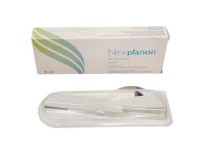
Nexplanon is one of the safest and most effective forms of contraception available and can last up to three years. The risk of getting pregnant is very low – less than 1 in 1000 per year.
Side effects
The progesterone implant requires a small procedure to insert it. It may cause headaches, nausea, breast tenderness and mood swings for the first few months but these usually settle. Your cycle may become irregular or stop altogether. Occasionally, it can cause acne.
Intrauterine contraceptive device: these are also called “coils” and are inserted into the womb, usually at the time of a smear. They are very effective, with less than 1 in a 1000 chance of pregnancy per year. Coils are either copper-based or release very low levels of a hormone called progesterone. The progesterone coil comes in a low dose, which lasts 3 years, or a higher dose, which lasts up to 7 years.
Rarely, approximately 1 in a 1000 women, may feel faint during a coil insertion. For women with heart disease this can be dangerous. Please ask your cardiologist to advise you. If fainting would be dangerous for you, then the coil should be fitted in hospital with a cardiologist being present.
The coil only prevents pregnancies in the womb itself and so does not prevent an ectopic pregnancy (a pregnancy outside the womb, usually in the tubes). Women who get pregnant with a coil should go to hospital as soon as possible to be checked.
Side effects
The progesterone coil can cause your periods to stop or become irregular. Some women experience spotting for the first three months after insertion, but this usually settles. Rarely, they can cause headaches, nausea, breast tenderness and mood swings but these usually settle after 1-2 months.
The copper coil can cause heavy painful periods.
There are two main types:
1. The combined pill (containing both oestrogen and progestogen hormones)
2. Progesterone-only pill (POP) or "mini pill”; this contains low doses of progestogen
1. The combined pill
This has a low failure rate if taken correctly, with 1 in 300 women becoming pregnant each year. The combined pill has many advantages, especially regulating periods. The combined pill is also available as a patch or vaginal ring.
Side effects
The most important complication of the combined pill is an increased (up to 3-7) times the risk of forming a blood clot or thrombosis in a vein. Certain heart conditions are associated with a higher risk of clotting and therefore you may be told that this form of contraception is not suitable for you.
2. Low dose progestogen-only pill (POP)
The older type of POP pill (for example, micronor) has a higher failure rate than the combined pill, which is why it has now been replaced by a newer version: Cerazette® (desogestrel). This is a new, higher-dose progesterone only pill, which stops ovulation and, has a failure rate similar to the combined pill.
Side effects
The low dose pill has almost no life-threatening side effects, although about one in five women stop taking it because of irregular bleeding.
Depo-Provera® is a progestogen-only hormone injection. The effect lasts for 12 weeks and often causes your periods to disappear, although they may become heavy or irregular if you decide to stop having the injections. The periods will often disappear during treatment, although they may be irregular or heavy for a while.
The failure rate is low, 1 pregnancy in 300 women per year, but this may not be a good option if you are on blood thinners because of bruising at the injection site.
Sterilisation may be an option for you, if you and your partner decide that you do not want to have children. A man can have a vasectomy and a vasectomy is more reliable, and safer, than female sterilisation.
For women, sterilisation is achieved using clips applied to the tubes, either through a keyhole method (laparoscopic) under general anaesthetic, or a mini laparotomy, which involves surgery rather than a keyhole incision. This can be performed under regional anaesthetic (not put to sleep) and can therefore be safer for some women with heart problems. A laparoscopy involves pumping gas at high pressure into the abdomen so that the womb and tubes can be visualised, this pressure can sometimes affect heart function.
Once the clips have been put in place, the risk of becoming pregnant is 1 in 500 (pregnancy can happen if the clip does not fully close the tube). The tubes can be tied and cut at caesarean section, but the risk of failure is greater at around 1 in 200.
Morning-after pill
Oral emergency contraception, or the morning after pill, is best used up to 48 hours after unprotected sex but can be taken up to five days. There are two types of pill available:
1. Progestestogen hormone (levonorgestrel)
You can either buy Levonelle® or get it free from some pharmacies, GPs, contraception clinics or sexual health clinics. Levonelle can be used up to 72 hours after sex. It consists of one tablet, which you should take as soon as possible.
Side effects
Taking Levonelle may upset warfarin control, and we would not advise you to take it if you have a rare condition called porphyria (not a heart disease).
2. Ulipristal acetate (ellaOne®)
This can be taken up to five days (120 hours) after sex and is available on prescription from your local doctor or sexual health clinic. It should not be used by women with severe asthma or liver disease.
Side effects
The side effects of emergency oral contraceptive pills are mild (nausea, breast tenderness, disruption to periods), but there are no long-term effects. Levonelle and ellaOne can also be affected by some medications (see above).
Coil
The copper IUCD (coil) is the most effective method of emergency contraception and will prevent over 99% of pregnancies. It can be used up to five days after unprotected sex or up to 5 days from the time of ovulation. You may also be offered an antibiotic to prevent pelvic infection. You can choose to keep using this IUCD for contraception or it can be easily removed when your next period comes.
Useful sources
Find out more about pregnancy and heart disease and family planning/family doctors:
- Royal College of Obstetricians and Gynaecologists: cardiac disease and pregnancy
- NHS: congenital heart disease in pregnancy
- The Somerville Foundation
- Family Planning Association
- Noah Health organisation
If you are a patient with heart disease and have any questions or concerns about the information provided in this leaflet, please speak to your consultant, specialist nurse, or email gstt.achd-rbh@nhs.net