
9 March 2026
To mark International Women’s Day, we sat down with women at our hospitals who are leading the way in research. They shared their experiences, inspirations and the challenges they’ve overcome on their journey.
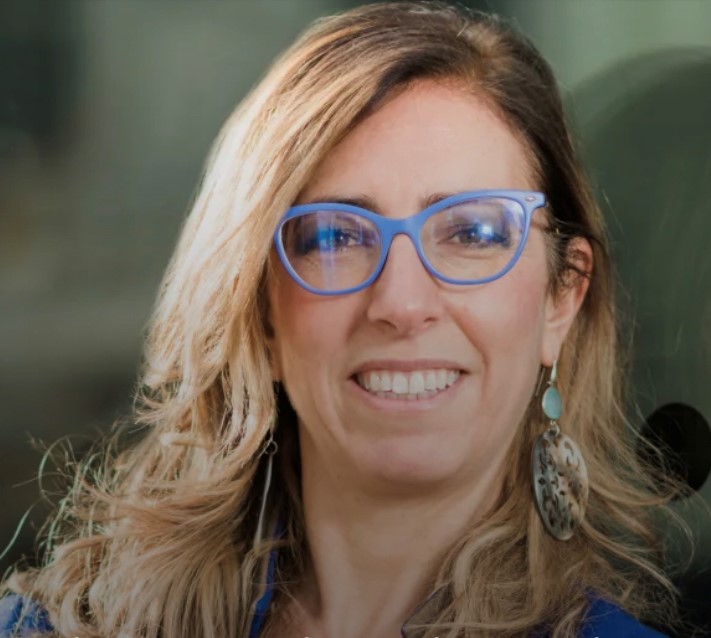
For this interview we spoke with Dr Chiara Bucciarelli-Ducci, consultant cardiologist, and internationally recognised expert in cardiac MRI.
Please could you give us an overview about your role.
I've been a consultant cardiologist since 2010, with a special interest in cardiac MRI (magnetic resonance imaging) which is the focus of my work. This is quite a specialist area, but it is increasingly important for the diagnosis and management of patients with cardiovascular diseases. I also do research in this field and involved in teaching across several settings. I teach at Imperial College London and King’s College London, support the training of junior doctors at the hospital, and deliver talks nationally and internationally at conferences and courses. Through my research, I supervise PhD students as well.
Beyond this, I have held and currently hold leadership roles in international professional associations in the field of cardiac MRI. I was the chair of cardiac MRI in the European Society of Cardiology and I am currently the chief executive officer for the Society for Cardiovascular MRI.
I like to advance the field of cardiac MRI from multiple angles and the combination of clinical, academic, teaching and leadership is one that I really enjoy. I like what I do, and I think that shows, which makes it easier to engage people, especially the younger generation.
What inspired you to get involved in research?
I started in this field very young, as a cardiology trainee in Italy back in 2003. At the time, my professor suggested I learn cardiac MRI because it was a new diagnostic tool that was expected to become very important in cardiology.
This led me to a 12-month fellowship in Chicago, which was my first exposure to cardiac MRI. Northwestern Memorial Hospital and Northwestern University were (and still are) at the forefront of the field. This is where I learnt how to scan and produced my first research papers in cardiac MRI.
Being in that environment sparked my interest in continuing in this field. It was fascinating to work in a field that was developing in real time, with so much happening, such as better imaging, better analysis and efforts to define the clinical value and accuracy of the technique. As a young cardiologist, I was completely drawn in. From Chicago, I looked for a role in Europe and discovered that Professor Dudley Pennell and physicist David Firmin were leading one of the world’s top centres at Royal Brompton Hospital and Imperial College. I applied right away, and in April 2006 I began my PhD in stress cardiac MRI.
Have you ever had to make any difficult decisions or faced any challenges in your career? If so, how did you overcome this and what did you learn?
Absolutely. Early in my career, I found myself in leadership roles, often the youngest person in the room and frequently the only woman. I remember vividly how some people treated me. But I didn’t let people talk down to me, and I learnt to be thoughtful about how I approached certain conversations. In one senior role, people assumed I was the secretary there to take minutes of the meeting, when I was actually chairing the meeting. Rather than complain, I used those moments as opportunities to make sure what I contributed was meaningful and brought an insightful perspective as a woman in leadership. Over time, people came to value my input.
I’ve also had times where I’ve felt lonely or professionally isolated. What helped me through that was focusing on what I enjoy at work, which is teaching, and travelling.
And of course, research itself comes with challenges. You often start without knowing where the work will lead, and securing funding can be tough. Applications are long and can still end in rejection, and then you start again. But I’ve learned that perseverance and looking for opportunities, especially in areas where research can have immediate relevance, can make all the difference.
What's been your greatest accomplishment so far?
I think the accomplishment I am most proud to date has been having a positive influence on other people’s professional lives, especially my fellows. When someone finishes their time with me, whether six months or longer, and tells me they’ve learned not just about cardiac MRI but also about approaching life with positivity and courage, that means more to me than any research paper or grant. I’m still in touch with many of them and seeing them succeed and now work alongside me on society boards genuinely brings me joy.
In terms of career milestones, I was recently invited to write the cardiac MRI chapter for the Braunwald’s Textbook of Cardiovascular Medicine. This is the leading textbook on cardiovascular medicine that any cardiologist in the world will know and have on their shelves. It’s written by some of the top cardiologists in the world, many of whom shaped the foundations of the field, so being asked to contribute was a huge honour. I was also invited to give the opening keynote lecture at the European Association of Cardiovascular Imaging, which felt like significant international recognition of my work and my contribution to the field.
On a more personal level, one moment that stands out was in 2009, when I had a skiing accident and broke my pelvis. I had to spend six weeks in bed and had to rely on my positive attitude. During that time, I decided to write a paper and submitted it to the American Heart Association conference. Not only was it accepted, but I was also shortlisted as a finalist, the only European among them.
Are there any women, either in your field or outside of it, who you admire and why?
There’s a quote from Michelle Obama on roadblocks that women face that has always resonated with me: “When they go low, we go high.” For me, it captures that bounce-back attitude and has inspired me through difficult times. I’ve also been lucky to have colleagues who have positively influenced me along the way, not just women. People like Dudley Pennell and my colleagues at Royal Brompton Hospital have demonstrated what it means to be both an excellent clinician and an effective leader. I try to learn from them, absorbing their approach and understanding – at least as much as I can!
Lastly, what piece of advice would you give to any junior colleagues in your field?
I’d say, do something you genuinely enjoy. Follow what excites you and don’t be afraid to step into uncharted waters. And, if you can, create a niche for yourself, don’t copy someone else. Forge your own path.
Invest in your education, be a sponge, and don't be afraid of self-introspection and learning about yourself. Build your confidence. Learn about your strengths and weaknesses and read the talent of the people around you.
There’s another quote I like that says: “It's hard to be a woman. You need to think like a man, act like a lady, look like a young girl and work like a horse.” I shared this at my recent keynote, along with a quote from Nelson Mandela: “It always seems impossible until it's done.” Those ideas have been a recurrent theme in my career to date. They sum up my attitude: never give up. If you want big things for yourself, you must have the courage to go for it.
Read our other interview with Sarah Collins, cystic fibrosis specialist dietitian.
Read more research stories or sign up to the research newsletter.