


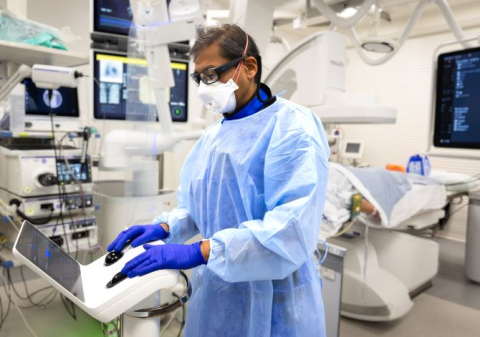
A UK-first study, carried out at Royal Brompton and St Bartholomew’s hospitals, has demonstrated that clinicians can safely and effectively reach and biopsy small nodules in difficult-to-access areas of the lung.
The new clinical study has shown that shape-sensing robotic-assisted bronchoscopy using Intuitive’s Ion endoluminal system (Ion) could help patients with suspected lung cancer to receive an early diagnosis, potentially leading to faster intervention and better outcomes.
Ion features an ultra-thin, shape-sensing catheter designed to navigate deep into the lung. This advanced technology enables physicians to access small, complex nodules and precisely position biopsy tools to sample potentially cancerous tissue with stability not available with manual bronchoscopy techniques.
The study enrolled 200 NHS patients at both hospitals with small, suspicious nodules to undergo biopsy using Ion in combination with cone-beam CT scan.
Published in Thorax, the study reported:
- 99% tool in lesion rate (198/200 patients), meaning physicians precisely placed a biopsy tool within the suspicious nodule using the Ion system
- 92% diagnostic accuracy (184/200 patients) meaning 184 patients had an accurate diagnosis from the biopsy tissue sample taken using Ion
Lung cancer is the most common cause of cancer death in the UK. Every year, around 49,000 people in the UK are diagnosed with lung cancer, and over half of cases are diagnosed at a late stage of the disease.
Due to challenges in securing effective biopsies for small nodules, some patients with suspected lung cancer may undergo long periods of ‘watchful waiting’ where their nodule is monitored but not definitively diagnosed. This can cause related anxiety and delays in accessing earlier treatment options.
Clinicians may be able to offer patients with suspected lung cancer an effective option for tissue biopsy with Ion, which could help accelerate clinical intervention, referral to treatment, and improved patient outcomes.
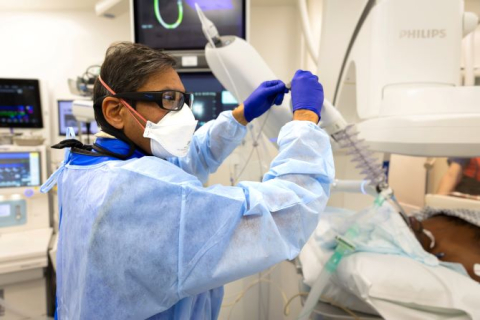
Professor Pallav Shah, Consultant Respiratory Physician at Royal Brompton Hospital, part of Guy’s and St Thomas’ NHS Foundation Trust, said:
“Lung screening is driving up the detection of suspicious, small lung nodules at an earlier stage – but without the means to access these nodules, it can raise questions rather than answers, and most patients are left to ‘watch and wait’ without a diagnosis.
“Now, by using Ion to reach and biopsy these nodules, we’re more likely to give patients a clear diagnosis sooner, making screening more meaningful than before. Most importantly, we can increase the chance of being able to provide curative treatment.”
Seventy-year-old Yvonne was part of the trial at Royal Brompton due to suspicious nodules on her lungs. Two were of concern, one of which was very small at only 6mm. Due to this technology, Professor Shah was able to effectively biopsy both nodules during the same procedure and collect tissue for sampling. The 6mm nodule was cancerous.
Yvonne said: “I feel very, very lucky to have been part of the clinical trial. It was amazing as the team were able to check the nodules in my lung at an early stage, which, while a shock that one was found to be cancerous, I was then able to go on and have it removed very quickly.”
Following the removal of the nodule, Yvonne didn’t need any follow-up treatment, such as radiotherapy or chemotherapy, which she says she is very ‘grateful’ for. Two years on, Yvonne is leading a healthy life.
Contact information
If you're a journalist and have a media enquiry, please contact us.
Phone: 020 7188 5577
Email: gstt.press@nhs.net