

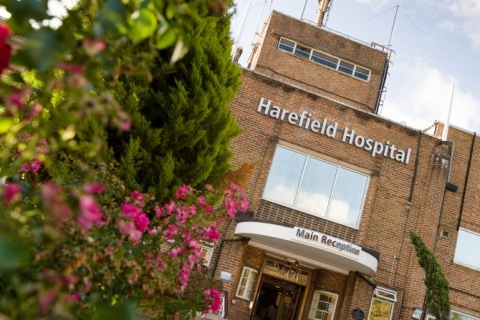
Harefield Hospital has been chosen as one of the UK’s first lung transplant centres to take part in a pioneering nationwide programme to increase lifesaving organ transplants by nearly a fifth.
NHS Blood and Transplant (NHSBT) has launched the first Assessment and Recovery Centres (ARCs) – specialist hubs where donated organs can be preserved and assessed using advanced technology. The first lung ARC opened in March 2026, and Harefield Hospital will begin receiving and assessing donor lungs in the coming weeks.
It means that for the first time, organs going to Harefield that might previously have been declined because of limited assessment time will have more chance. Some organs which have not yet been accepted for transplant will go to the ARCs, for longer assessment, so some can then go on to be accepted for transplant.
Currently, many organs are declined simply because there is not enough time to carry out the tests needed to be confident they will work well for a recipient. The ARC model gives clinicians more time, more data, and safer conditions to make those decisions.
With more than 8,000 people on the transplant waiting list, a fully established ARC network could deliver up to 750 additional transplants each year – potentially transforming outcomes for hundreds of patients. Harefield has been at the forefront of ‘ex‑vivo’ lung perfusion since 2009, keeping donated lungs working outside the body so clinicians can check them properly before transplant.
Dr Vicky Gerovasili, Consultant in Respiratory and Transplant Medicine at Harefield Hospital, welcomed the hospital’s selection as an ARC site:
“This represents a unique opportunity to increase our lung transplant numbers and build on our work at Harefield over the last 15 years. More than 30 Harefield patients have benefited from ex-vivo technology in that time and we are looking forward to contributing further to national efforts to improve transplant rates, providing many more patients with the transformative, lifesaving potential of a successful new organ.”
The ARC pilot comes at a critical time for patients, with the transplant waiting list at a record high. As the donor population ages, more organs now come from people who have died because their heart has stopped – known as donation after circulatory death. These organs can only go without oxygen for a short period, making them more difficult to assess quickly and contributing to organs being declined simply because clinicians cannot gather enough information in time.
The ARC pilot programme brings together leading transplant centres across the country. If successful, NHSBT plans to expand ARCs into dedicated facilities capable not only of preserving and assessing organs but also reconditioning them through surgical repair, targeted medications, or other advanced therapies.
Dr Zubir Ahmed, Health Innovation and Safety Minister, said:
"This programme could mean saving and transforming hundreds of lives that might otherwise have been lost. As a transplant surgeon, I know first-hand what that can mean for patients and families, and I am proud that the UK is leading the world in this approach."
Anthony Clarkson, NHSBT director of organ and tissue donation and transplantation, said:
“There is an urgent need to innovate in organ utilisation. Survival on the transplant waitlist is a daily struggle, and hundreds of patients will die this year before they can receive a life-saving transplant. Donation alone cannot close the gap. The ARCs programme will help us preserve donor organs so we can assess them and make the best use of the gift of donation.”
Contact information
If you're a journalist and have a media enquiry, please contact us.
Phone: 020 7188 5577
Email: gstt.press@nhs.net